News
Our products are exported to over 30 countries.
Possess the full-process development capability from concept design to mass production and implementation

Possess the full-process development capability from concept design to mass production and implementation
Optimizing Industrial Drying and Curing Processes: An In-Depth Analysis of Vacuum vs. Nitrogen Ovens and Specialized Curing Applications
In industrial production, the drying and curing of materials are crucial steps to ensure product quality, performance, and stability. Ovens, as fundamental and efficient equipment, utilize heated air or radiant heat to evaporate moisture or solvents from materials. They are widely used across industries such as food, chemical, pharmaceutical, electronics, and materials science. To meet the specific process requirements of different materials, various specialized oven curing and curing oven solutions have been developed.
Vacuum Ovens: Gentle and Efficient Precision Drying/Curing
Vacuum ovens create a low-pressure environment within the chamber, significantly lowering the boiling point of moisture and solvents. This allows for drying or processes like epoxy curing to be completed at relatively lower temperatures. This method greatly reduces the risk of thermal damage to heat-sensitive materials, making it ideal for curing oven composites, certain adhesive curing oven applications, or processing oxidation-prone materials. However, the curing/drying rate is typically slower, and the maintenance costs of the equipment and vacuum system must be considered.
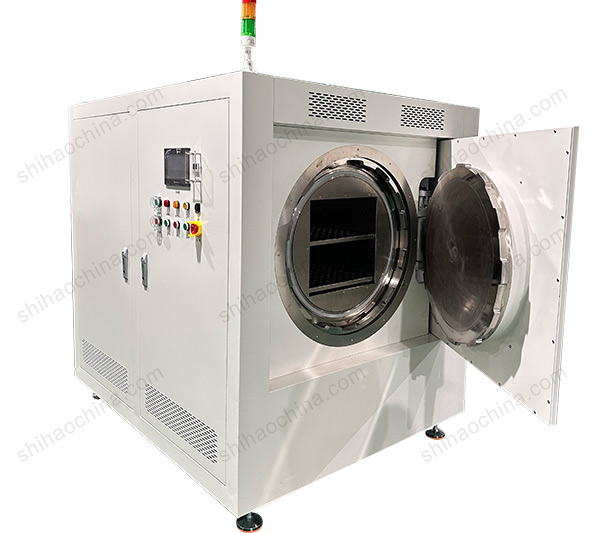
Nitrogen Ovens: Rapid and High-Purity Protective Curing
Nitrogen ovens work by continuously purging the chamber with high-purity nitrogen gas, displacing oxygen and moisture to create an inert atmosphere for drying or curing. This method effectively prevents material oxidation, often achieves faster curing speeds than vacuum methods, and excels in applications like powder coating curing oven processes, Cerakote curing oven operations, electronics manufacturing, and scenarios requiring an ultra-clean environment (e.g., industrial curing oven use in the semiconductor industry). The primary drawback is the ongoing cost associated with nitrogen consumption.
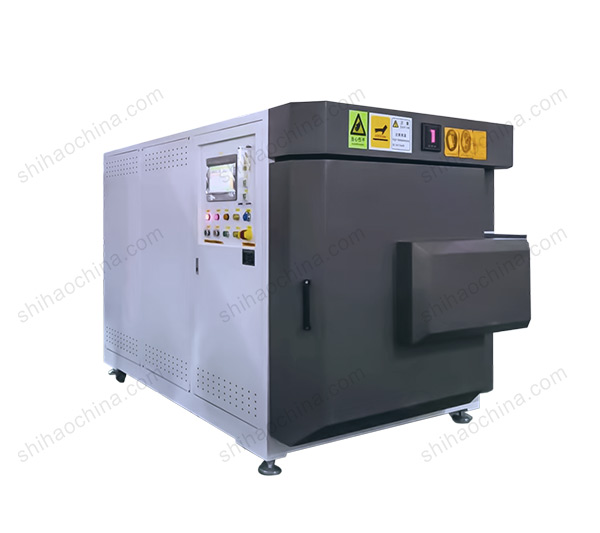
Choosing the Right Drying and Curing Equipment
Selecting the appropriate equipment requires a comprehensive trade-off based on material properties and process goals:
For heat-sensitive, volatile, or solvent-removal applications, such as using a composite curing oven, pre-drying before uv curing oven treatment, curing wood in the oven to stabilize its structure, or curing cast iron in oven for seasoning, vacuum ovens are often the superior choice.
For materials prone to oxidation or requiring fast curing in an oxygen-free environment, such as processes in a powder coat curing oven, dtf curing oven, paint curing oven, or curing oven for cerakote coatings, nitrogen ovens are more suitable.
Modern curing ovens are highly specialized. For instance, an ir curing oven uses infrared for efficient heating, an adhesive curing oven optimizes temperature profiles for specific binders, and a powder curing oven ensures optimal flow and curing of the coating.
From general-purpose curing ovens to highly specialized composite curing ovens and curing oven for powder coating, or even curing sweet potatoes in the oven for food processing to enhance sweetness, choosing the correct equipment directly impacts final product quality, production efficiency, and cost control.
Conclusion
Whether for basic oven curing or complex curing oven composites processes, vacuum ovens and nitrogen ovens each possess irreplaceable advantages. Understanding the different types of curing ovens—such as powder coating curing oven, epoxy curing oven, uv curing oven, and more—along with their underlying principles, is key to optimizing production workflows and ensuring superior product performance. Companies should carefully select the most suitable drying and curing solution based on their material's chemical and physical properties, production scale, quality requirements, and cost budget.
19 years of focus on research and development as well as production