News
Our products are exported to over 30 countries.
Possess the full-process development capability from concept design to mass production and implementation

Possess the full-process development capability from concept design to mass production and implementation
Fire incidents in vertical powder coating production lines have long plagued manufacturers using industrial curing ovens, with sudden fires negating frequent cleaning efforts. This article analyzes the root causes of curing oven fires, identifies hazard prompts, and proposes targeted solutions to eliminate fire risks, optimizing the safety and efficiency of the powder coating curing process.
Polyester resin, a key raw material for powder coatings, releases resin-containing volatile gases during the curing process in industrial curing ovens. When these hot gases contact cold air, they condense into tiny particles that accumulate into flocculent lint over time. This lint adheres to all parts of the curing oven—furnace walls, channels, air curtain ducts, and fan blades—requiring production shutdowns for cleaning every week. Each cleaning takes 4-5 hours, including removing air curtain fans, blowing ducts, polishing fan blades, and cleaning inlets/outlets, with 4-5 cleanings monthly. Most manufacturers suspect that lint ignited by static electricity is the main fire cause in curing ovens.
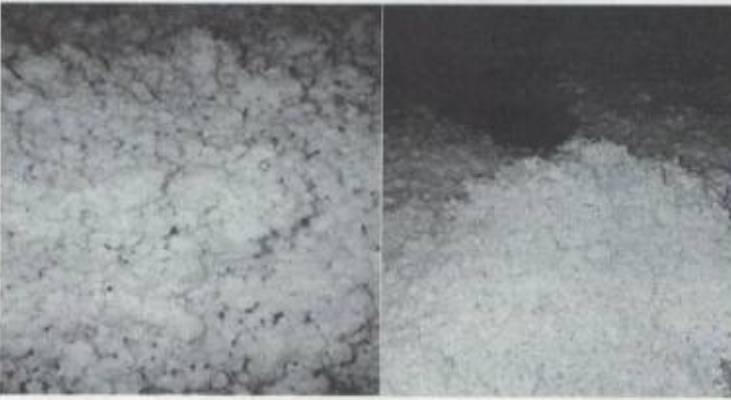
The core breakthrough to reduce lint formation is minimizing the contact between oven-internal volatile gases and cold air. Increasing the air volume in the air curtain area of the industrial curing oven can effectively reduce the overflow of hot air, cut heat loss, and decrease lint formation from resin-containing gases—while also lowering natural gas consumption, bringing significant economic benefits to powder coating production.
A more critical fire hazard than surface lint is the crystalline deposits in the furnace top insulation layer. The volatile gases that form lint penetrate the rock wool insulation of the curing oven’s top, where they do not form lint but sparse tiny crystals. These crystals accumulate into dense yellow deposits over about a year; new curing ovens have compact rock wool with only local crystals, but frequent foot traffic on the furnace top loosens the rock wool (a dedicated walking/cleaning channel on the furnace top is recommended), spreading yellow crystals to the insulation bottom and darkening the rock wool. Experiments confirm that darkened rock wool is flammable, and yellow crystals have an ignition point below 200℃, making the furnace top insulation layer a hidden fire source in industrial curing ovens.
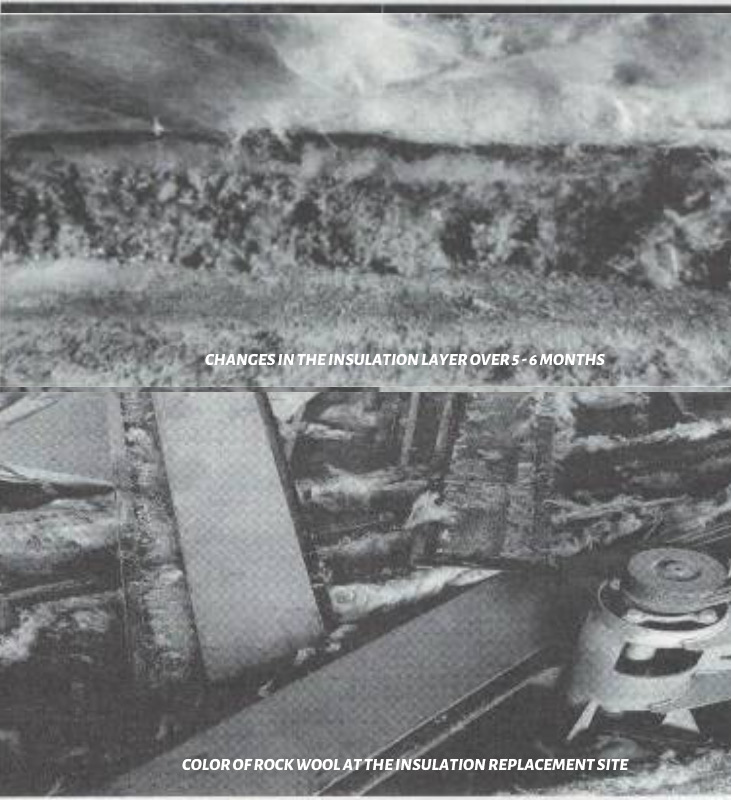
A clear equipment prompt for this hazard is the exudation of oily substances on the outer wall of the powder coating curing oven. Most coating enterprises conduct annual thorough equipment maintenance, and oily exudation on the curing oven’s exterior indicates a large amount of volatile matter release inside the oven and a high risk of dangerous crystalline deposits in the furnace top rock wool. New or short-used industrial curing ovens never show this phenomenon, making the outer wall condition a key visual indicator for fire risk assessment.
Fire sites in vertical powder coating curing ovens follow a specific pattern: fires start at the feed inlet, then spread to the discharge outlet; after the inlets/outlets burn for a period, smoke emerges from the air curtain fan on the furnace top. The actual ignition points are always at the chain entry/exit of the curing zone—since the constant-temperature curing zone has no lint formation, fires only occur at the unstable-temperature connection between the air curtain zone and curing zone.
A frequently overlooked fire-prone area is the exhaust fan on the furnace top of the curing oven. During a fire, attention is focused on the oven interior, and few check the exhaust fan if the inlet/outlet fire is unextinguished. However, the exhaust fan exacerbates the fire: it discharges a large amount of heat from the industrial curing oven, and its exhaust pipe accumulates a large amount of highly flammable lint over time. If the workshop top is a flammable structure, this easily causes a large-scale fire. Some technicians propose removing the exhaust fan (a controversial suggestion), but domestic enterprises without this fan on their powder coating curing ovens have never experienced fires.
Based on the above fire cause analysis and fire site observations, targeted solutions can completely eliminate fire risks in vertical powder coating curing ovens: timely remove lint inside the industrial curing oven; regularly replace the furnace top insulation layer or use higher-density, better-insulation materials for filling; and closely monitor the outer wall condition of the curing oven, addressing oily exudation promptly. These measures cut off the fire source at the root and ensure safe operation of the vertical powder coating production line.
The optimal time to replace the furnace top rock wool of the curing oven is April to May each year; construction in June to September (hot weather) leads to extremely high furnace top temperatures, reducing construction efficiency and quality significantly. Safety and quality notes for replacement: frontline workers must wear gas masks, wrap their necks with towels, and wear safety helmets; waste rock wool on the furnace top must be sealed in bags on-site and lowered to the furnace bottom with ropes (never throw it directly down); the replacement process must prioritize safety and quality to avoid reduced insulation performance after replacement.
Twelve Common Problems of Powder Coatings in Industrial Curing Ovens
Smoke Improvement Analysis for Powder Coating Curing Process
Basic Understanding of Wrinkle Powder Coating Curing
Material Cost Control for Aluminum Profile Powder Coating
Reducing Powder Coating Application Costs to Enhance Enterprise Competitiveness
Smoke Analysis & Preliminary Solutions in Powder Coating Baking Process
19 years of focus on research and development as well as production