News
Our products are exported to over 30 countries.
Possess the full-process development capability from concept design to mass production and implementation

Possess the full-process development capability from concept design to mass production and implementation
As environmental regulations tighten and the construction machinery industry prioritizes sustainable development, powder coating technology has become the mainstream choice due to its excellent environmental benefits and coating performance. Powder coating significantly reduces VOC emissions and minimizes investment and operating costs for exhaust treatment systems. However, for large structural components, the cooling efficiency after curing has become a critical bottleneck affecting overall production line performance. This article provides an in-depth analysis of the key design considerations for the cooling zone in construction machinery powder coating curing ovens and presents proven optimization strategies to help enterprises improve coating efficiency and product quality.
The application of powder coating in the construction machinery sector is expanding from thin sheets and small structural parts to large welded structures. These large workpieces are typically made from steel plates 10–20 mm or thicker, resulting in high thermal mass. This creates unique challenges during the cooling phase:
Slow Cooling Rate: The core temperature of the workpiece remains high. Surface-only air cooling is insufficient to rapidly lower the temperature to the handling level (typically near ambient temperature).
"Heat Rebound" Phenomenon: After the surface cools, heat from the interior conducts outward, causing the surface temperature to rise again, which interferes with subsequent processes.
Production Cycle Constraints: Construction machinery production cycles are relatively long. The cooling zone must achieve effective cooling within a limited number of stations (typically 2–3) and time (30–45 minutes).
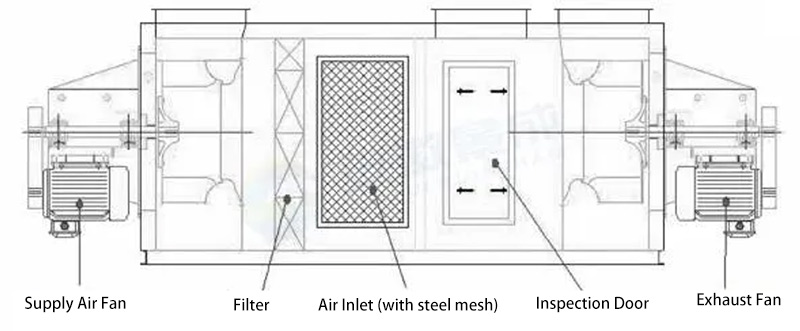
The primary goal of cooling zone design is for the workpiece to reach ambient temperature upon exit, with a temperature rebound not exceeding 10°C during transfer from the buffer zone to the unloading area.
Typical Components of a Forced-Cooling Zone:
Enclosure: Often constructed with 50 mm composite rock wool sandwich panels, balancing insulation and visual consistency with other line sections.
Air Supply and Exhaust System: The core component, responsible for introducing filtered outside air and exhausting hot air.
Air Blow Hood: Equipped with adjustable high-velocity nozzles. Outlet air velocity is typically designed around 15 m/s, with duct velocities of 8–12 m/s.
Air Exchange Rate: The enclosure air should be exchanged at least 6 times per minute, which can be increased based on cooling demands.
For existing production lines, the most direct modification is to increase air velocity:
Retrofit Fans: Increase impeller speed by replacing fan pulley belts, utilizing the equipment's design margin to boost airflow.
Result: Increasing nozzle velocity from 14 m/s to 16 m/s can significantly accelerate the heat exchange rate on the workpiece surface, reducing cooling time.
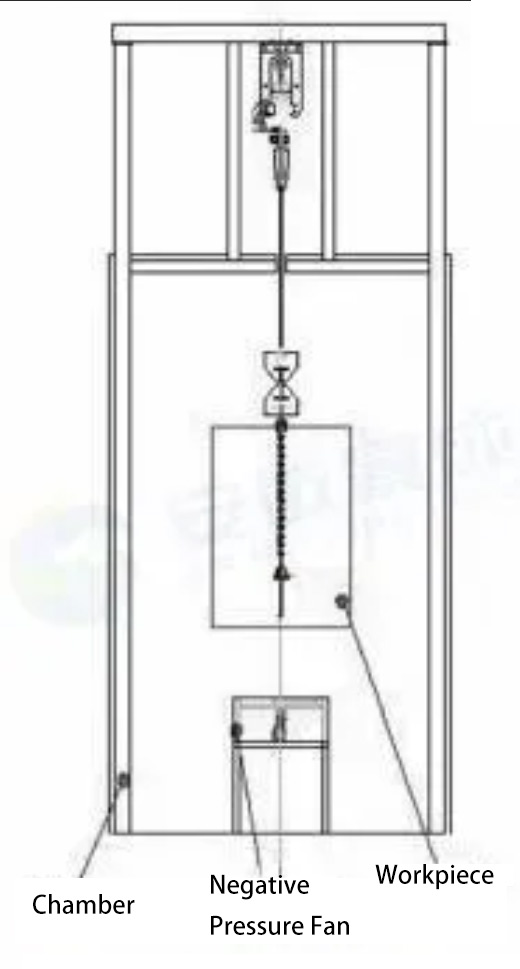
To address the inherent "heat rebound" in large structural parts, it is recommended to upgrade traditional open buffer areas into Enclosed Active-Cooling Buffer Zones.
Key Design Elements for an Optimized Enclosed Buffer Zone:
Enclosure: Structure consistent with the forced-cooling zone, ensuring sealing and aesthetic unity.
Air Supply System: Multiple extractor fans are installed beneath the workpiece, directing airflow upward. Louvre openings on the sides allow for passive air intake, maintaining air movement across the workpiece surface.
Exhaust System: Equipped with axial or centrifugal fans to actively expel accumulated hot air outdoors or to a high point in the workshop, preventing heat buildup and improving both cooling efficiency and the working environment.
This design offers an effective, lower-investment solution that extends the workpiece's active cooling time and solves the temperature rebound issue.
Air has a relatively low specific heat capacity, limiting the amount of heat it can carry per unit volume. For scenarios with extreme cooling requirements, introducing Water Mist Evaporative Cooling technology can be considered:
Principle: A misting device is added to the air supply system, atomizing water and mixing it with air before it is blown onto the workpiece. Water evaporation absorbs substantial heat, offering far greater cooling efficiency than air alone.
Applicable Scenarios: Suitable for production lines requiring immediate unloading after cooling with no buffer zone.
Note: This solution increases both initial equipment investment and operating costs (water treatment, energy consumption), requiring a comprehensive cost-benefit evaluation.
Project Overview:
Workpiece: Large structural components, max dimensions 7.5m × 1.5m × 2.0m, plate thickness 8–25 mm.
Cycle Time: 20 minutes per station.
Cooling Design: 2-station forced-cooling zone (40 min) + 3-station enclosed buffer zone (60 min). Total cooling time: 100 minutes.
Detailed Design Parameters:
Forced-Cooling Zone: Enclosure length 16 meters. Air supply/exhaust volume calculated at 61,000 m³/h based on 6 air changes per minute. 350 staggered nozzles were arranged, achieving an outlet velocity of 14.8 m/s.
Enclosed Buffer Zone: Enclosure length 24 meters. Seven extractor fans (30,000 m³/h each) were installed at the base, directing airflow upward. Louvre intakes were placed on the lower sides, coupled with an active exhaust system.
This design successfully addressed the cooling and heat rebound challenges for thick-plate workpieces, ensuring production cycle times, and serves as a reliable reference for similar projects.
Optimizing the cooling zone in construction machinery powder coating lines is crucial for enhancing overall line efficiency and ensuring coating quality. Enterprises are advised to:
Prioritize Airflow Assessment: Implement low-cost fan retrofits on existing lines.
Standardize Enclosed Active Buffer Zones: Incorporate them into the planning of new production lines to effectively manage heat rebound.
Evaluate Advanced Solutions as Needed: Assess the economics of technologies like water mist cooling for lines with extremely high cycle time requirements.
By scientifically designing cooling systems, construction machinery manufacturers can not only meet environmental regulations but also achieve dual improvements in production efficiency and product quality, strengthening their market competitiveness.
19 years of focus on research and development as well as production