News
Our products are exported to over 30 countries.
Possess the full-process development capability from concept design to mass production and implementation

Possess the full-process development capability from concept design to mass production and implementation
Design Features of Vacuum Ovens: Key design elements include the inner chamber material, controller selection, sealing integrity, heating element design, wiring layout, and exterior aesthetics—all factors determining whether the vacuum oven achieves the desired quality standards. Extensive work and experimentation have been conducted to rationally select suitable materials and components for vacuum ovens. Experimental results indicate that high-quality materials and components are crucial. During the design phase, we conduct detailed analyses of customer requirements based on specification standards. When selecting a vacuum oven, factors such as application environment, usage characteristics, and customer specifications must be fully considered.
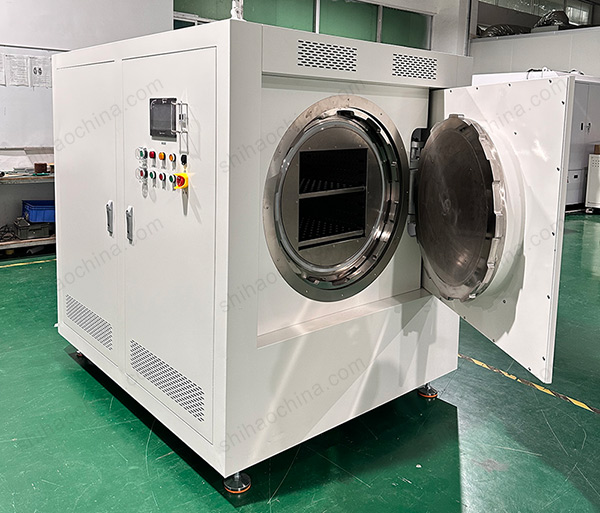
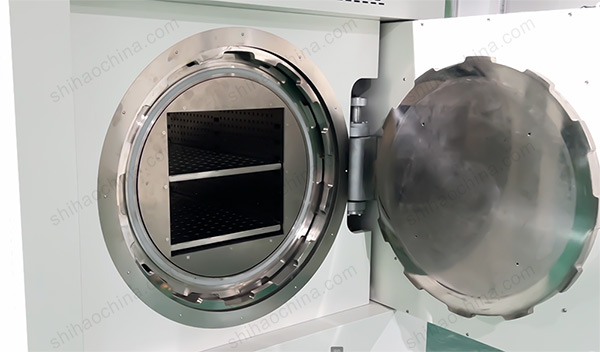
This type of vacuum drying oven lacks a forced-air circulation system. It employs heat conduction for heating, with heating tubes encircling the inner chamber to radiate heat from the periphery toward the center. Its sealing system is robust; under full vacuum conditions, the door cannot be opened. Air must be introduced by opening the inlet valve before the door can be normally opened. The double-door design provides a solid foundation for sealing integrity.
Damage to the vacuum oven's sealing ring directly compromises its seal integrity. Vacuum ovens are widely used in chemical and pharmaceutical industries, where chemical components are present, making components prone to wear and tear. A customer inquired: Why is my vacuum oven leaking air? The most likely cause is a damaged seal ring. The oven's silicone rubber is not resistant to corrosion or acids/alkalis, so special care is needed during use to prevent direct liquid contact with the seal ring.
The temperature control system in modern vacuum ovens represents a critical advancement in ensuring precise and reproducible drying processes. Utilizing PID (Proportional-Integral-Derivative) controllers with high-resolution displays, these systems allow operators to set and maintain temperature profiles with an accuracy of ±0.5°C. Advanced models incorporate multiple temperature sensors placed at strategic points within the chamber, providing real-time thermal mapping and automatic adjustment of heating elements to eliminate hot spots. The integration of safety interlocks represents another crucial design feature: vacuum sensors prevent heating above safe thresholds, door-locking mechanisms engage automatically during vacuum cycles, and pressure relief valves protect against over-pressurization during gas purging cycles. These automated safety features not only protect valuable samples but also minimize operator intervention and reduce training requirements.
If your area is relatively cold, and vacuum oven heating operates based on ambient temperature. The minimum operating temperature is room temperature plus 10 degrees Celsius. Therefore, during selection, temperatures that are too high or too low are unsuitable. Please consult the sales department for technical confirmation. This characteristic complies with industry standards.
19 years of focus on research and development as well as production