News
Our products are exported to over 30 countries.
Possess the full-process development capability from concept design to mass production and implementation

Possess the full-process development capability from concept design to mass production and implementation
Vertical curing ovens serve as core critical equipment in continuous production lines for color coating, shipbuilding, and similar industries. During operation, they generate substantial amounts of volatile organic compound (VOC) emissions. If these emissions are discharged without effective treatment, they not only pollute the environment but may also pose risks to human health. Therefore, scientifically sound and compliant treatment measures must be implemented. Currently, numerous VOC treatment technologies exist within the industry for vertical curing ovens, each with distinct advantages, disadvantages, and applicable scenarios. This paper systematically analyzes the core principles, advantages, and limitations of five mainstream treatment technologies, providing professional guidance for enterprises in technology selection and optimization of treatment solutions.
Core Principle: Waste gases are directly introduced into a dedicated combustion chamber. At high temperatures of 700-850°C, harmful organic compounds in the exhaust come into full contact with flames. Through oxidation and decomposition reactions, these compounds are converted into harmless carbon dioxide and water, achieving exhaust gas purification.
Thorough and stable purification, highly adaptable to fluctuations in VOC composition and concentration, with reliable treatment performance.
Streamlined process flow, convenient operation and maintenance, and strong resistance to interference.
High fuel consumption during high-temperature operation, resulting in high energy costs.
High cost of combustion equipment and heat recovery systems, requiring significant initial investment.
Poor economic viability when treating large volumes of low-concentration VOCs.
Core Principle: Utilizes catalysts such as precious metals to induce flameless combustion reactions at low temperatures (250-400°C), enabling oxidation and decomposition without high-temperature open flames to purify exhaust gases.
Low-temperature operation significantly reduces energy consumption, offering superior long-term operational economics.
Compact equipment footprint with minimal nitrogen oxide generation ensures excellent environmental performance.
Precious metal catalysts are costly and prone to deactivation (“poisoning”) by impurities, requiring strict pretreatment and regular replacement.
Catalyst and supporting equipment increase initial investment costs.
Core Principle: Leveraging activated carbon's enormous specific surface area and abundant pore structure, this method employs physical adsorption to firmly trap organic molecules from exhaust gases onto the carbon surface, achieving gas-solid separation and exhaust purification.
Advantages
Suitable for high-volume, low-concentration VOCs with excellent treatment efficiency.
Enables resource recovery through desorption and reuse of organic solvents.
Flexible operation accommodates fluctuating exhaust loads.
Limitations
Requires regeneration or replacement upon saturation, resulting in high operational costs.
Demands exhaust gas cooling and thorough removal of paint mist/dust, necessitating stringent pretreatment.
Adsorption heat may trigger bed combustion/explosion, posing safety risks.
Core Principle: Utilizes water or specialized chemical absorbents as media. Through gas-liquid contact devices, waste gas fully contacts the absorbent medium. Leveraging the solubility or chemical reactivity of organic components in the liquid phase, harmful substances are transferred to the liquid phase to achieve waste gas purification.
Simple equipment with low initial investment and operating costs.
Operates at ambient temperature, ensuring high safety and suitability for pre-treatment of dust-laden or paint mist-containing exhaust gases.
Absorption waste liquid requires secondary treatment, potentially causing secondary pollution.
Low removal efficiency for hydrophobic VOCs, limiting applicability.
Core Principle: Achieves efficient heat recovery through the cyclic absorption and release of heat by regenerative ceramic media. Waste gas is first heated by preheated regenerators before entering the combustion chamber for high-temperature oxidation and decomposition. Purified flue gas then heats cold regenerators, with over 95% of heat recovered by reversing the gas flow direction, enabling energy recycling.
Exceptionally high thermal efficiency with minimal auxiliary fuel consumption and low operating costs.
Suitable for medium-to-high concentration VOCs, delivering stable purification rates that meet regulatory standards.
High equipment costs for heat storage media and switching valves, resulting in significant initial investment.
Stringent maintenance requirements for high-temperature components; strict control of exhaust gas particulate matter is essential to prevent blockages.
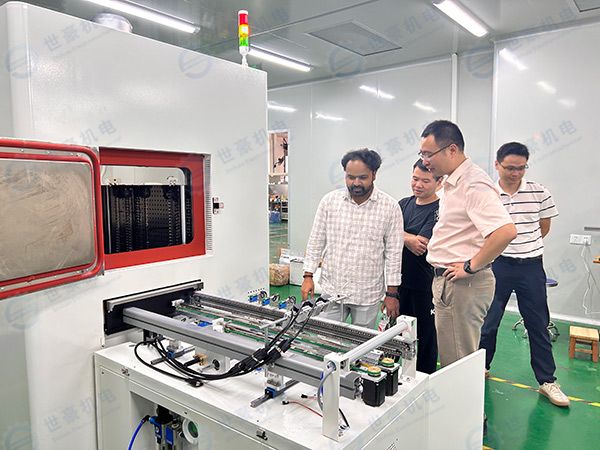
When selecting an exhaust gas treatment solution for vertical curing ovens, comprehensive consideration should be given to exhaust gas concentration, composition, airflow volume, investment budget, operational energy consumption, and environmental requirements. Opt for highly efficient, energy-saving, and easy-to-maintain technologies to achieve a balance between short-term investment and long-term benefits. From a technical suitability perspective: Direct combustion is suitable for scenarios requiring high stability and thorough treatment; Catalytic combustion suits single-component exhaust with energy-saving advantages and compact footprint; Regenerative Thermal Oxidation (RTO) handles medium-to-high concentration, high-volume exhaust with over 95% heat recovery, aligning with energy-saving and low-carbon trends; Activated carbon adsorption is ideal for high-volume, low-concentration exhaust or scenarios requiring solvent recovery; Absorption offers cost advantages for budget-constrained projects or as front-end pretreatment.
Shihao Electromechanical offers specialized solutions for vertical curing oven exhaust treatment: Catalytic combustion units utilize high-performance catalysts and modular design, equipped with intelligent pretreatment systems. Maintenance efficiency increases threefold, with purification efficiency exceeding 95%, making them particularly suitable for industries like coating and shipbuilding; Regenerative Thermal Oxidation (RTO) units utilize high-efficiency heat storage ceramics and precision switching valves, maintaining stable heat recovery rates above 95% for energy-self-sustaining operation. Additionally, we provide combined “adsorption concentration + catalytic combustion” processes alongside front-end absorption pretreatment systems, forming customized end-to-end exhaust treatment solutions. These comprehensively address diverse operational requirements, helping enterprises achieve environmental compliance and operational efficiency gains.
19 years of focus on research and development as well as production